

Pre Tour Information
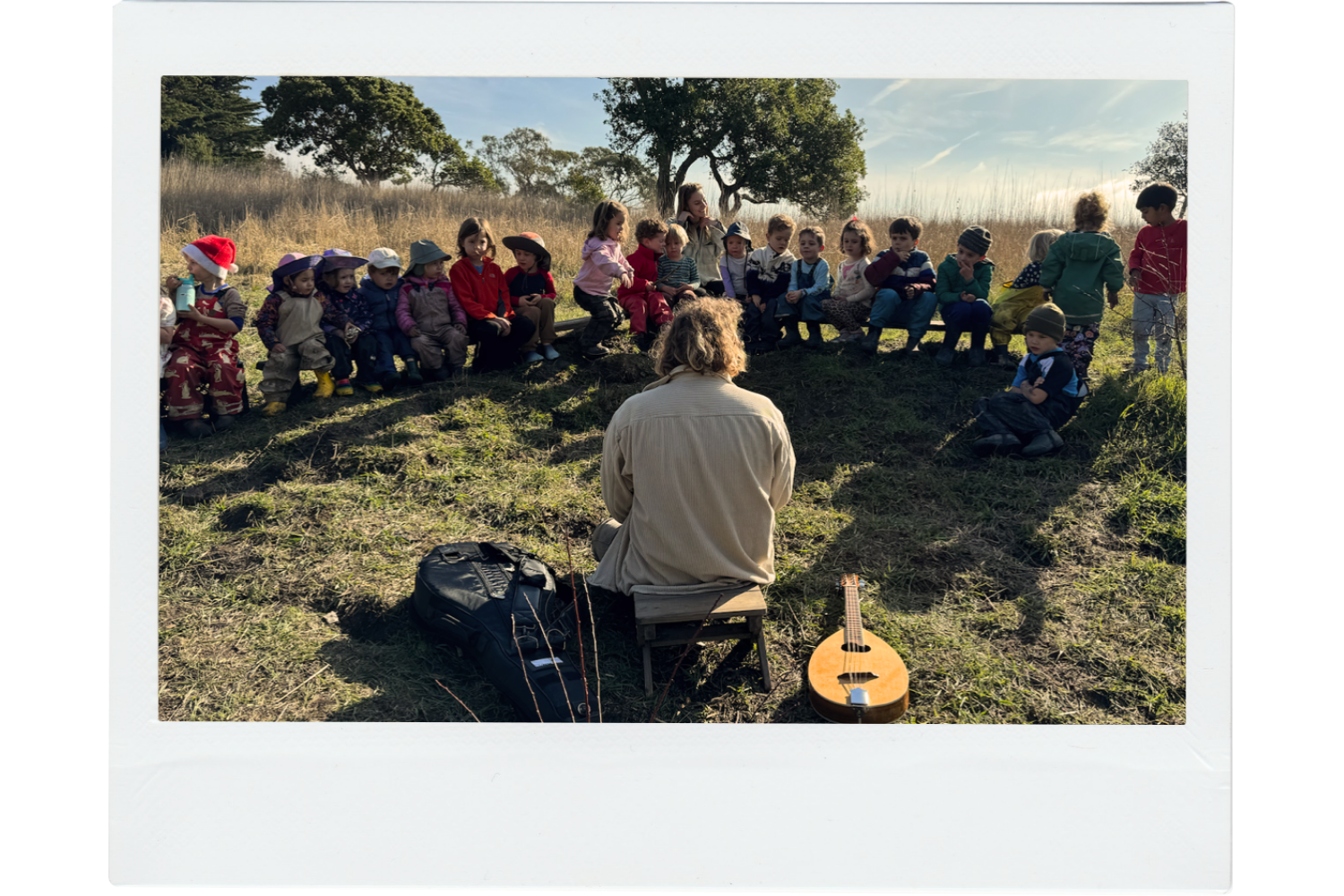
Visiting Harmony Montessori & Forest School
Your visit will begin in our Montessori Classroom, continue through our Forest Program, and finish in our Young Child Community.
Because there’s a lot to see in a short time, this guide offers a glimpse into what each program provides and how our community works together to support children’s growth. You’ll have time for questions at each stop and again at the end of your visit.
The Young Child Community
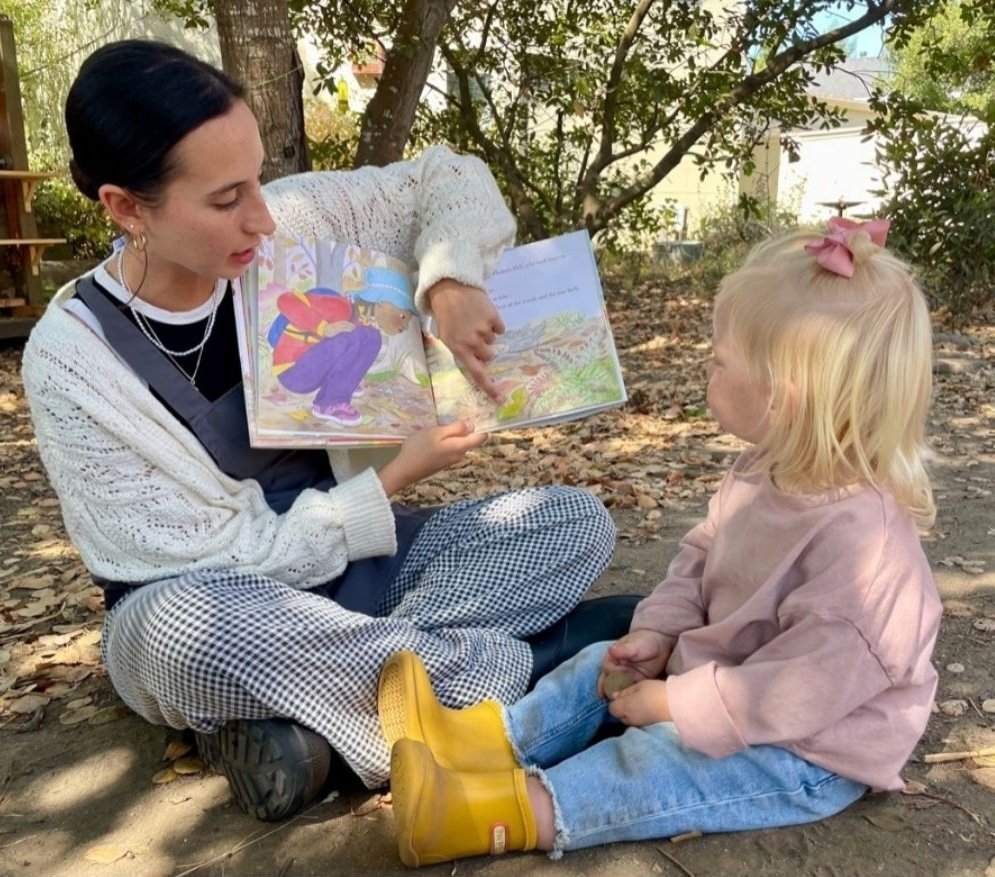
18 months – 3 years
Offered M-Th
4 Half Days: 9:00 – 11:45 AM
4 Full Days: 9:00 – 2:30 PM
Our Young Child Community (YCC) is a gentle beginning for toddlers taking their first steps toward independence. This program focuses on language, movement, and self-care in a small, nurturing group. The environment is carefully prepared to offer just enough challenge for each child while maintaining a strong sense of safety and belonging.
Children who begin in the YCC are expected to continue into one of our Primary Programs, either the Montessori Classroom or the Forest Program, as the next step in their development. Staying within the Harmony continuum gives them a seamless transition and allows us to continue nurturing the independence and curiosity that take root in these early years.
The Montessori Classroom
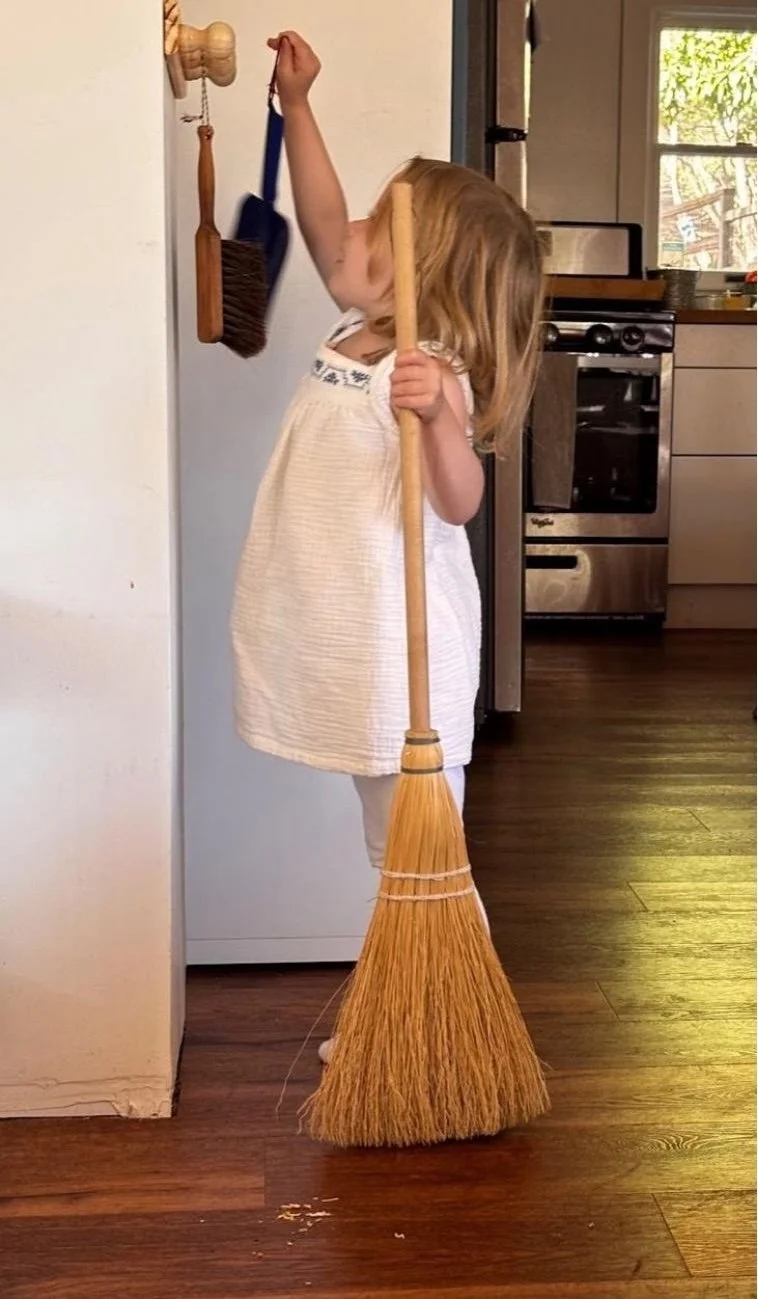
Ages 3 – 6
3 or 5 days
3-day program: Mon/Tue/Wed
Hours: 9:00 AM – 1:00 PM
Aftercare until 2:30 PM available at no extra cost when your child is able to manage a longer day
The Montessori environment helps develop many positive attributes, but at its heart it is a community devoted to helping children grow into capable, compassionate human beings who carry with them a lifelong love of learning and a positive attitude about school.
Here, children move freely within a structured environment, choosing meaningful work that calls to them. They learn through their hands, at their own pace, guided by teachers who observe carefully and step in only when needed to give lessons and guidance.
Though it is not our goal, reading, writing, and math emerge naturally from curiosity and readiness, not from pressure. We do not hold an agenda for what a child should be learning when. The role of the Montessori teacher is to follow the child, facilitate their interests, and remove obstacles from their learning path.
Families are encouraged to remain in our preschool program for three years, completing the full Montessori cycle. We understand that this may not be possible for every family, and when transitions occur sooner, we work together to support a smooth, positive move.
We do ask, however, that families not plan to leave for Transitional Kindergarten (TK) in the public schools. A powerful experience is had when a child is allowed to grow through our mixed-age classroom, entering as the youngest and growing to be the oldest. In this way, our children experience mastery, offer benevolence, and provide mentorship to their younger peers. They leave our program having experienced belonging and a sense of importance within their community.
The Five Areas of the Montessori Classroom
Each area of the classroom offers specific experiences that together form a foundation for lifelong learning:
-
Children are introduced to the alphabet first by sound — the phonetic sound each letter makes — and then by the name of the symbol that represents it. You might hear them joyfully singing both versions of the alphabet. This phonetic awareness gives them a natural and confident entry point into reading and writing.
-
Materials in this area refine the senses — sight, touch, sound, taste, and smell. Children explore dimension, texture, and pattern, laying a foundation for mathematical and scientific thinking.
-
Here, children first work with tangible quantities — learning “this many is one, this is a picture of one; this many is two, this is a picture of two.” Through this work, the abstract becomes concrete, and number sense grows through experience rather than memorization.
-
This area develops coordination, concentration, and care of self. Pouring, polishing, sweeping, and sewing refine fine-motor skills and satisfy the child’s deep drive to say, “Help me do it myself.” Work in this area develops the muscles of independence both physically and psychologically.
-
This area introduces children to the wider world through geography, biology, art, and cultural study. Dr. Montessori believed that a broad view of the world would make children more peaceful humans. Children learn about the people of each continent — how they meet their needs for food, shelter, clothing, and defense — and discover both our shared humanity and our differences.
Children also explore creative expression daily through art, offering opportunities for sewing, drawing, painting, clay work, and collage.
The Forest School
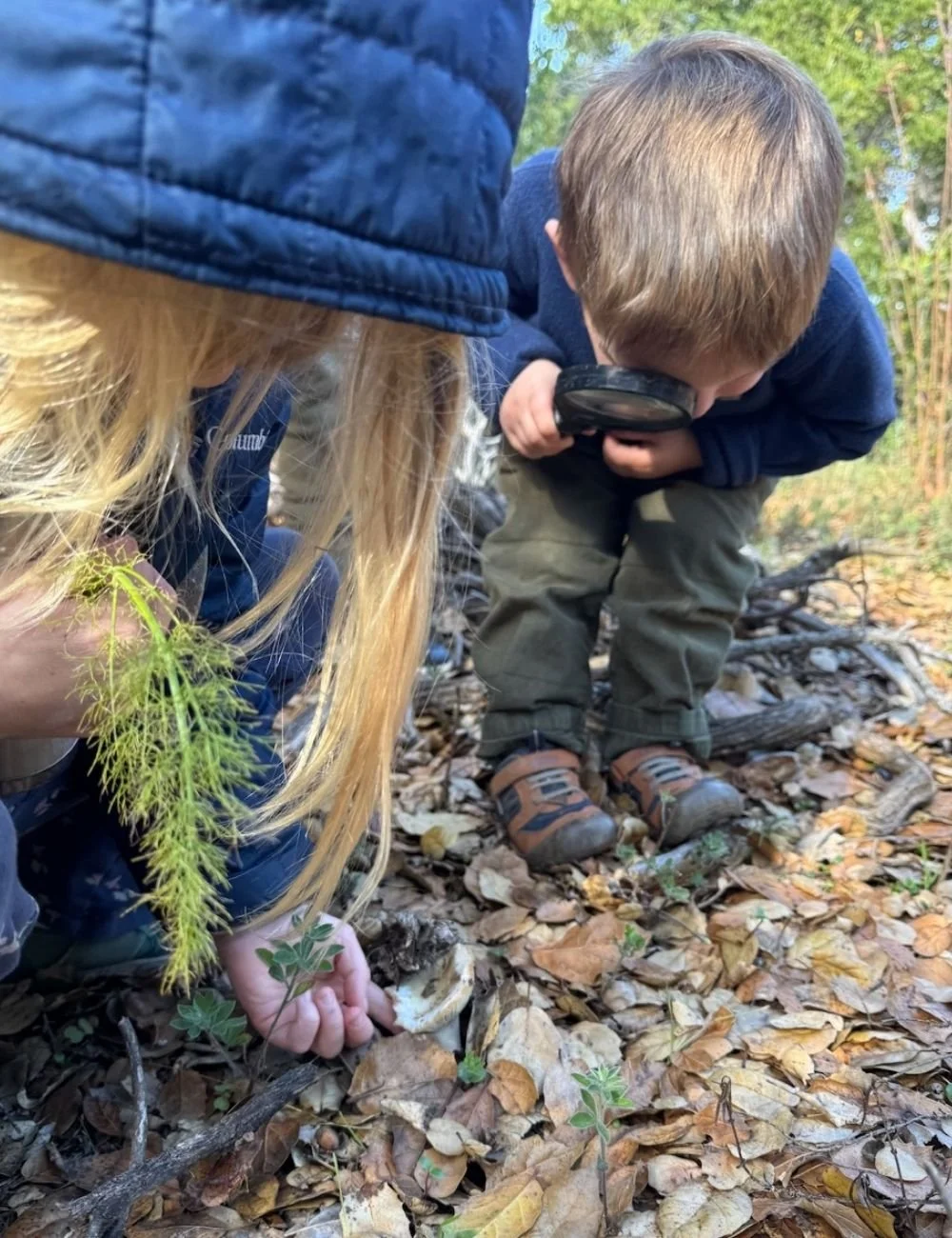
(Ages 3 – 6)
3 or 5 days
3-day program: Mon/Tue/Wed
Hours: 9:00 AM – 1:00 PM
Aftercare until 2:30 PM available at no extra cost when your child is able to manage a longer day
Our Forest Program offers a joyful immersion in nature. Children spend their days outdoors, exploring the living classroom around them, climbing, building, discovering, and playing in all weather. Time in the forest builds physical strength, balance, and resilience, and it fosters deep curiosity and calm attention.
What You’ll Find in Our Forest Classroom:
A building area with tools and natural materials for big, heavy work and fine-motor construction
An art area for sewing, drawing, painting, clay work, and collage
A music corner where instruments are freely available and collaboration is encouraged
A mud kitchen, a favorite space for dramatic play and sensory exploration.
Here, children engage their imagination, develop problem-solving skills, and form a lasting connection with the natural world. The Curriculum is brought through stories, puppet shows, and plays that the children often participate in creating.
Additional Information
-
Our favorite classrooms of all, beloved by teachers, children and parents alike is the 11 acres that surrounds us. Though each of our programs has beautiful classrooms and a base camp where we begin and end our day, all of our groups can be seen exploring every corner of this land that is home to Harmony.
-
Children who begin in our Young Child Community move into one of our Primary Programs when they are ready, typically around age three. Those who join Harmony at age three or older enroll directly in either the Montessori Classroom or the Forest Program, where they remain through preschool or kindergarten. We ask that families not plan to leave for Transitional Kindergarten (TK) in the public schools. A powerful experience is had when a child is allowed to grow through our mixed-age classrooms, entering as the youngest and growing to be the oldest. In this way, our children experience mastery, offer benevolence, and provide mentorship to their younger peers. They leave our program having experienced belonging and a sense of importance within their community.
Harmony graduates go on to attend local public schools such as Strawberry Point, Edna Maguire, Tam Valley, Old Mill, Park, and Reed, as well as independent schools including Mount Tamalpais, Marin Country Day, Mark Day, and New Village.
-
We recognize that raising children within a community of shared agreements is an empowering experience. It allows parents to relax with one another, to trust in the collective care of the group, and to hold the school as a sacred space, one where we align around what best serves our children.
-
Harmony families believe in the child’s innate ability to grow and contribute meaningfully. Adults guide with respect, provide consistent boundaries, and model kindness.
Our classrooms follow a few simple principles:
Children may choose their own work and continue for as long as they wish, as long as they are not disturbing others or harming materials.
We don’t require children to share or say “I’m sorry” on command. Instead, we teach conflict resolution and healthy boundaries. Children are encouraged to ask for what they want (“can I please play with the dump truck when you are done?”) And to recognize that classroom materials belong to everyone, (“yes, I’ll give it to you when I’m finished.”)
We don’t use timeouts or punitive forms of discipline. Instead, teachers aim to get at the heart of what is going on with the child.
At Harmony, we do not hold the belief that a child is inherently naughty, mean, or a bully. This perspective requires us to look deeper at behavior, to see what a child might be communicating through their actions. Children are constantly seeking firm boundaries; clear expectations help them feel safe and grounded. Often, challenging behavior stems from inconsistent boundaries, lack of follow-through, or mixed signals from caregivers.
At times, developmental differences or sensory processing challenges may also lead to dysregulation and difficulty with self-control. When this occurs, it’s essential that parents, teachers, and the broader community work together to understand and support the child. In the early years, self-regulation is still developing. By learning how each child experiences the world, we can respond with understanding and provide the right kind of guidance and structure.
-
The early years are a time of imagination and deep sensory learning. Harmony families agree to limit screen time, reserving it for shared experiences like family movie nights rather than solitary viewing. Families are also conscious of the content that they are exposing their children to, as well as the pace of the frame changes that occur on the screen. Research from the American Academy of Pediatrics and Montessori educators shows that limited exposure supports creativity, attention, and emotional balance.
-
We provide a self-service snack in all of our programs. All food served at Harmony is whole-grain, organic when possible, well-balanced, minimally processed and free of artificial flavors, colors, and sweeteners.
Families are responsible for providing a packed lunch that follows similar guidelines and is waste-free (with reusable containers rather than single-use plastics.) These small daily choices help children develop lifelong respect for their bodies and for the earth’s resources.
-
Our community agreements don’t mean every family lives by identical rules. What’s important is shared respect. Each family brings its own rhythms and traditions, while honoring the values we uphold together.
Is Harmony the Right Fit for Your Family?
Harmony is a place where children grow into capable, kind, and curious people, supported by families who share a commitment to simplicity, health, and connection.
As you prepare for your visit, we invite you to reflect:
Do our values around independence, healthy living, and time in nature resonate with your family?
Do you appreciate a learning environment built on respect, rhythm, and trust in each child’s pace?
Does the idea of a community that works together toward shared goals feel right for you?
Families who find themselves answering yes to these questions usually discover that Harmony feels like home.
Warmly,
Wilana